
Some North Carolina RV parks say they’re open year-round right on their own website, while an outside directory for that same park lists a seasonal closing date instead. Both sources can’t be right at the same time.
The fastest way to settle it is a short, repeatable check: read the park’s own site, cross-reference an outside directory, then call and ask specifically about water access, not just whether the gate stays open. That one phone call settles more than either source alone.
Why year-round doesn’t always mean what it says
Most North Carolina campgrounds operate on a season that roughly follows the school calendar: busy from spring through fall, then closed or scaled back from November through March. A park that stays open past that point is the exception, not the rule.
Open year-round and fully operational year-round aren’t always the same promise. A park can let RVs stay through winter while shutting off the bathhouse or draining the water lines, usually to save on off-season staffing or protect exposed pipes from a hard freeze. None of that is dishonest. It’s just why a park’s own site and an outside directory listing for the same property can quietly disagree about the same dates.
Start with the region, not just the park
Before you research individual campgrounds, narrow the map by region, since North Carolina doesn’t really have one winter. It has three.
Coastal parks along the Outer Banks and the southeastern shore see the mildest winters in the state, which is why several markets cater to snowbirds. Piedmont parks, around cities like Raleigh and Greensboro, sit in between, with shorter and less frequent hard freezes than the mountains see. High-elevation parks in towns like Waynesville, Maggie Valley, or Whittier climb into real snow country, which is exactly why many close for the season.
Lake and foothill settings sit lower than those in high mountain towns, putting them in a milder middle-ground climate-wise, though that’s a factor worth asking about directly rather than assuming either way. If deep winter feels like more commitment than you want, spring trips or fall foliage sights dodge the hardest weather while still avoiding peak summer crowds.
The verification checklist
Once you’ve narrowed the region, the actual verification is short and repeatable.
- Check the park’s own website for season dates specifically, not just a general year-round banner in the hero image.
- Cross-reference that against an outside source, such as Good Sam, Campendium, RV LIFE, or Hipcamp. A mismatch, the site claiming open all year while a directory lists a seasonal close, is worth noticing before you book, not after.
- Call the resort directly and ask the specific questions below. A phone call gets a same-day, specific answer instead of a generic email reply, and it’s the step most people skip.
- Mention your rig upfront if it’s larger or older than a standard travel trailer, since some parks handle winter site access differently for big rigs.
Questions to ask before you book a year-round park
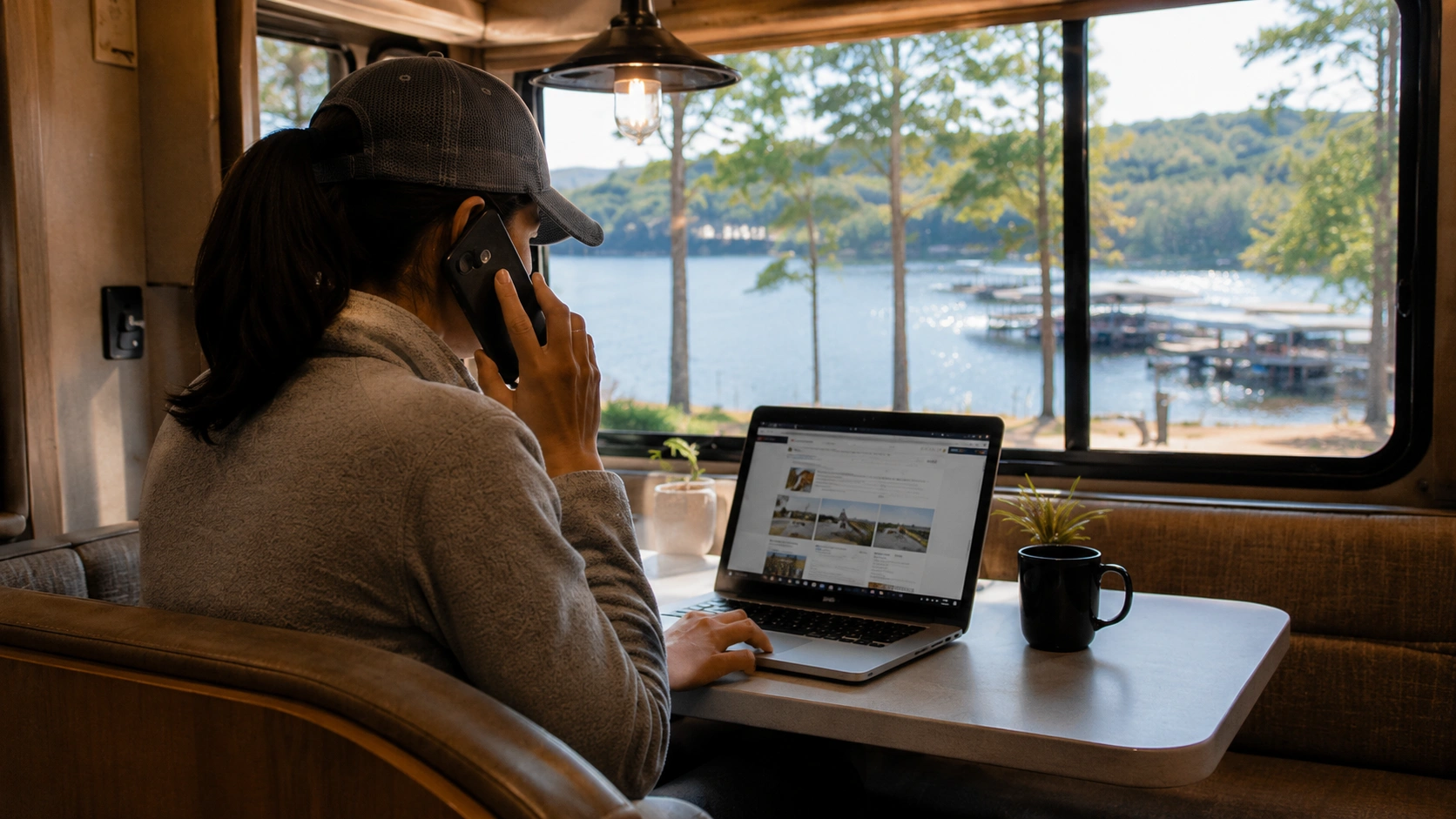
Once someone’s on the phone, ask specifically rather than generally. A general question about winter hours is easy to answer with a reflexive yes; these aren’t:
- Are full hookups, water, electric, and sewer, available through the winter, or just electric?
- Does the water get shut off at any point in the year, and if so, starting when?
- Do I need a heated water hose or any other winterizing setup to stay past a certain date?
- Is the bathhouse or laundry facility open year-round, or only seasonally?
- If bad weather closes the road or the park temporarily, what’s the cancellation or rebooking policy?
A park that answers these five without hesitation is telling you something real. A vague answer means keep asking.
What extended-stay and off-Season RVers look for
If you’re planning a longer stay rather than a weekend trip, the calculation shifts. Extended-stay and off-season RVers tend to care less about summer-only amenities and more about whether a park offers full-hookup RV sites on monthly, seasonal, or annual rates instead of pricing everything by the night. Some North Carolina resorts, including Lake James Camping Resort & Marina, offer that structure.
A gated, low-traffic setting and easy transportation around the property, like golf cart access, matter more the longer you stay, and it’s worth asking whether the park keeps an early-access list for popular sites that tend to fill up early.
A year-round option on Lake James
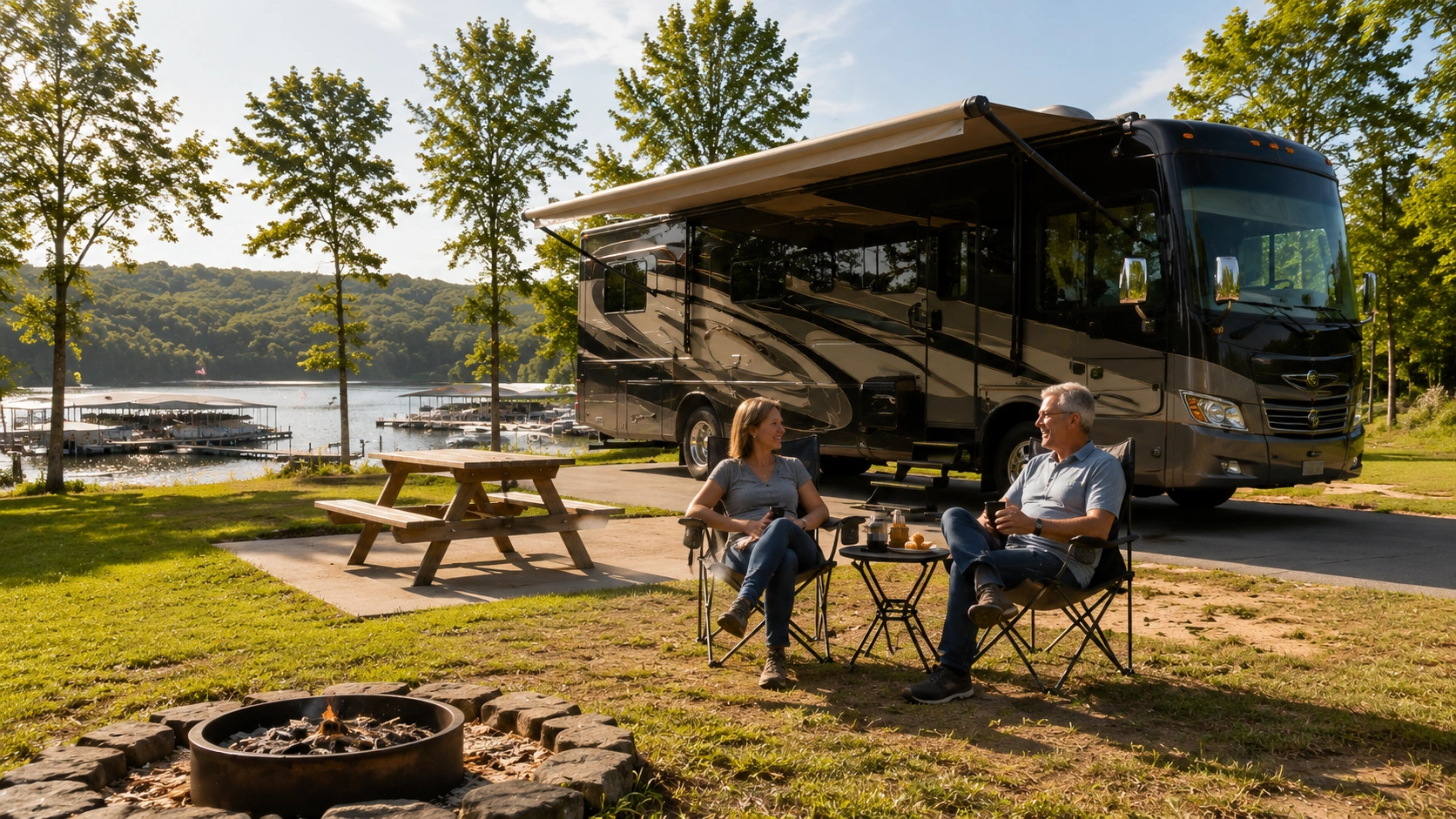
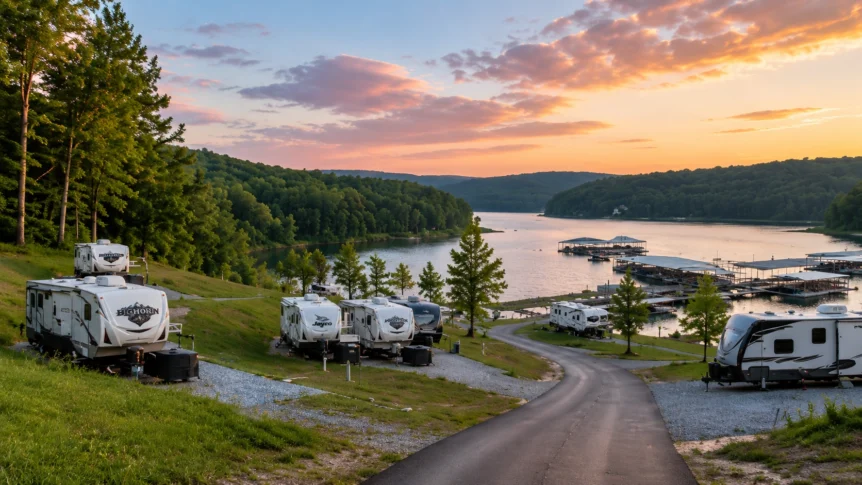
Lake James, in the Blue Ridge foothills of McDowell County, is a useful example of how regional elevation shapes the landscape. At Lake James Camping Resort & Marina, our 140 boat slips run year-round, not seasonally, so a boat stays in its slip through the fall and winter instead of being launched and loaded on a schedule. The resort also sits about four miles off I-40 at Exit 94, an easier winter drive than the long mountain roads leading into some higher-elevation parks farther west.
It’s a freshwater lake, not a coastal inlet, in keeping with the resort’s own line: No Salt, No Sharks, No Worries. Lake James also offers monthly, seasonal, and annual RV site rates for longer stays, and you can book a stay once you’ve settled on dates. As with any park, confirm current RV site availability directly before you commit.
Quick answers for winter and off-Season RV trips in NC
How far is a year-round RV park from Charlotte or Asheville?
It depends on the region. Coastal parks are 3 to 4 hours from Charlotte; Piedmont parks are often under 2 hours from either city; and mountain or foothill parks near Asheville can be 45 minutes to 1.5 hours from Charlotte.
Do I need a heated water hose to camp in North Carolina in winter?
If you’re staying somewhere with working hookups through a hard freeze, yes. A foam sleeve alone won’t protect a standard hose once temperatures drop into the 20s, so know how to disconnect and drain your lines if the park shuts water off entirely.
Can a fifth wheel or big rig stay at a year-round NC RV park?
Many can, but not every site is rated for larger rigs. Confirm site length, pad type, and turning clearance when you call, rather than assuming a year-round label means every site fits a 40-foot rig.
What’s the difference between a seasonal and a year-round RV park?
A seasonal park closes for part of the year, typically November through March, then reopens once the weather turns. A year-round park stays open on the calendar, but open and fully operational aren’t always the same claim, so confirm which one you’re actually getting.
None of this is complicated once you know what to check: region first, then cross-reference, then a direct phone call before you commit to a date. If Lake James’s foothill setting and year-round marina fit what you’re looking for, reach out and confirm current RV site availability for your dates.